

How Beauty Businesses Can Create a Service Discovery Path
A clear beauty service discovery path helps potential clients move from curiosity to informed action with confidence. Rather than presenting every service, specialty, and business detail at once, beauty professionals can organize information in a sequence that makes services easier to explore, compare, and understand.
This approach is useful for salons, spas, independent stylists, estheticians, nail artists, lash professionals, massage studios, wellness centres, med spas, tattoo studios, and other client-centred businesses. A thoughtful path can support a polished digital presence while helping clients find the information that matters to them at the right moment.
What a beauty service discovery path is
A beauty service discovery path is the sequence of information that helps a person understand what your business offers and decide what they would like to explore next. It may begin with a social post, a search result, a referral, a category page, a business profile, or a direct visit to your website.
The path is not a single page. It is the connected experience created by your service names, descriptions, images, specialty details, location information, booking or contact options, and educational content. Each part can help clients answer one practical question before moving to the next.
For example, a person may first search for a broad category such as hair, nails, massage, brows, or skin care. They may then look for a nearby professional, explore service types, review a professional’s specialties, and decide whether to reach out or make an appointment. When information is organized clearly, that process feels more natural.
A strong path also recognizes that clients do not always arrive with the same level of knowledge. One person may already know the exact service they want, while another may only have a general goal, an occasion, or an inspiration image. Both visitors should be able to find a comfortable starting point. Broad category pages can welcome people who are still exploring, while clear service details can support those who are ready to learn more about a particular specialty.
Consider the discovery path as a helpful conversation that continues across your digital presence. A social post may introduce an idea, a profile may explain your specialty, a category page may help clients browse related services, and a contact or booking option may provide a clear next action. The goal is to create continuity, so clients do not need to restart their research whenever they move from one channel to another.
Photos, service names, short descriptions, and calls to action can each play a useful role. Images can give visitors visual context, particularly for beauty services where style and presentation are meaningful. Descriptions can explain what a category includes, and calls to action can guide clients toward the most relevant resource. When these elements work together, your business can present its services with clarity and care.
It can also be helpful to review the path from a first-time client’s perspective. Open your social profile, website, listing, or service menu on a mobile device and ask whether the next step feels obvious. Look for places where a visitor may need more context, such as an unfamiliar service name or a category that contains several specialties. Small improvements can make the overall experience more welcoming and easier to navigate.
GlowHives offers category pages that can support this kind of exploration, including hair service discovery, nail service inspiration, brow and lash exploration, and massage and spa options.
Start with client questions
The strongest beauty service discovery path starts with the questions clients already ask. These questions reveal what information should appear early, what needs more explanation, and where clients may appreciate a simple next step.
Common questions often include:
- What services do you specialize in?
- Which service is appropriate for the result I want to explore?
- What should I know before my first appointment?
- How do I find a professional who offers a specific beauty or wellness specialty?
- Where can I review services before deciding what to book?
Make a note of these questions over several weeks. Ask front-desk staff, independent contractors, and team members what they hear most often. Review direct messages, comments, consultation forms, and conversations after appointments. You are not looking for a perfect list; you are looking for recurring patterns.
Then group the questions by stage. Some questions are discovery questions, such as “What is available?” Others are evaluation questions, such as “Which option fits my goals?” A final group is action-oriented, such as “How do I take the next step?” This simple structure helps you decide what information belongs on each page or in each piece of content.
Organize salon service categories clearly
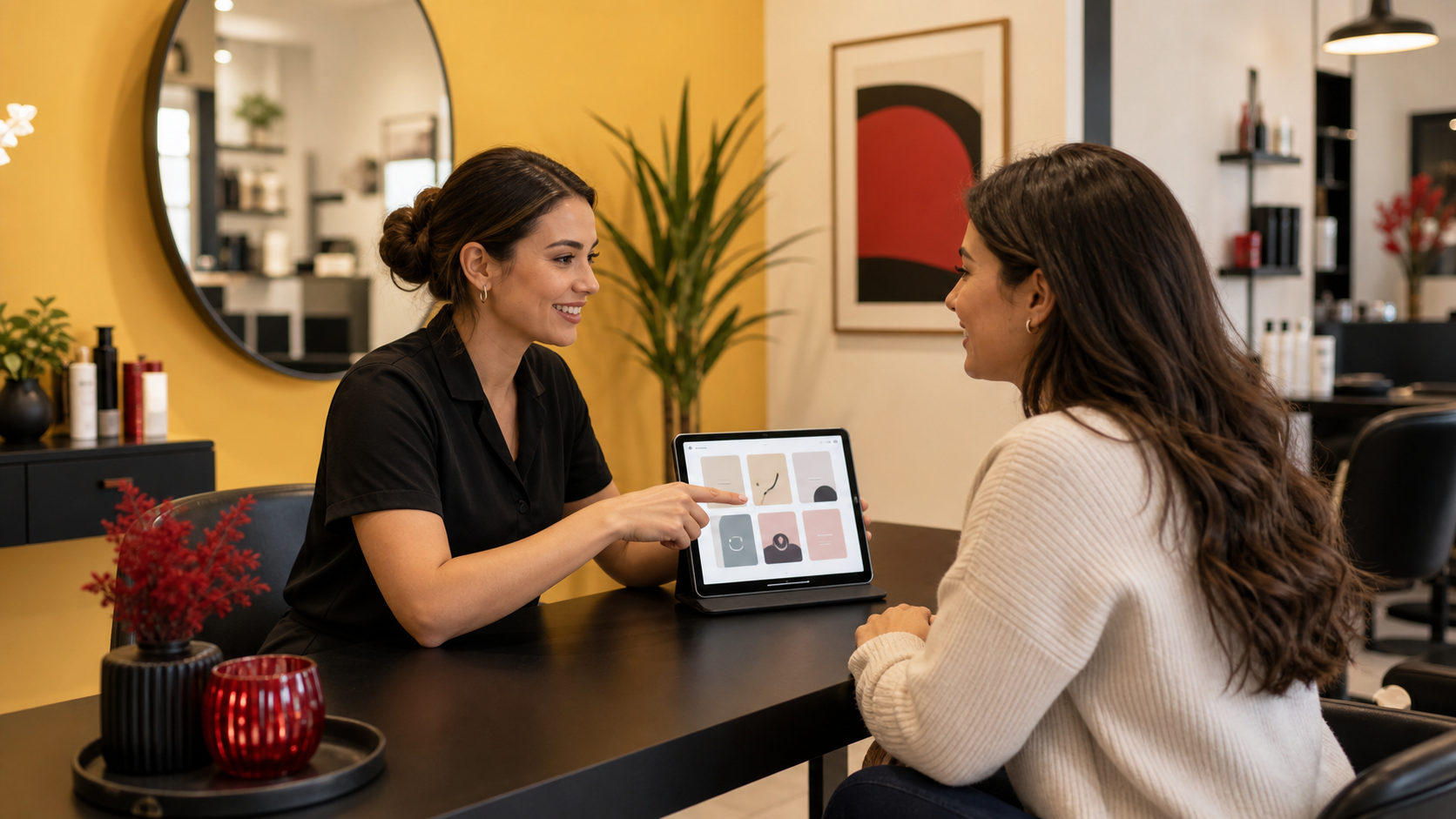
Clear salon service categories make a business easier to explore, especially for new clients who may not know the language used within the industry. Categories should help people recognize what they are looking for without requiring them to understand every technical detail before they begin.
Begin with familiar high-level categories, then offer more specific paths as clients show interest. A hair business might begin with cuts, colour, styling, treatments, and texture-focused services. A nail business might begin with manicures, pedicures, nail art, and care-focused appointments. A skin care studio might distinguish between general skin care, facial-focused services, and professional consultations without overwhelming a first-time visitor.
One useful test is to ask whether a client could choose the right category from the name alone. If not, add a short, friendly description. You can also use images or examples where they genuinely improve understanding.
Relevant GlowHives destinations can help clients browse by interest. Consider linking to makeup and beauty services for event-related content, hair removal options for personal-care planning, or medical aesthetics resources when the topic is relevant to your audience.
Support beauty client research
Beauty client research is an important part of the modern client journey. People may compare ideas, gather inspiration, look for a particular speciality, check location details, and review a professional’s public service information before contacting a business.
Support that research by creating layers of information. The first layer should be quick to scan: your main categories, key specialties, general location, and the clearest available next step. The second layer can provide more detail, such as what a service is designed to help clients explore, how a professional approaches their specialty, or what someone may want to consider before an appointment.
The third layer can include deeper educational resources. A lash artist might create an introductory guide for people researching brow and lash services. A wellness practitioner might share a general planning checklist for clients exploring self-care options. A barber can create content that helps clients identify the grooming services they want to discuss during a visit.
Google’s guidance emphasizes helpful, reliable, people-first content rather than content made primarily to manipulate search visibility. It also recommends using the words people use to find content in prominent places such as headings, alt text, and link text. Google’s people-first content guidance is a useful reference when reviewing whether your service pages answer real client questions.
Write useful service information for salons
Helpful service information for salons gives clients enough context to understand what they are exploring without making every page feel overly technical. The aim is clarity, not complexity.
For each core service or category, consider including a short introduction, the kinds of client goals it may relate to, any relevant specialization details, and a clear action prompt. If your business uses consultation-based services, explain that clients can use a consultation to discuss the options that fit their interests.
A practical service-information template can include:
- Service name: Use a client-friendly term that is easy to recognize.
- Short overview: Explain the category in two or three approachable sentences.
- Who may explore it: Describe general goals or occasions without making personal recommendations.
- Specialty details: Mention the professional’s focus areas only when accurate and current.
- Next step: Invite clients to review more information, browse a category, contact the business, or use the available booking process.
This structure can also support your social media captions, email campaigns, and business listings. When the core description is clear, it becomes easier to adapt without repeating vague language across every channel.
For clients researching specialised categories, a relevant destination can make the next step more intuitive. GlowHives offers pages for skin care service discovery, wellness-focused exploration, and barber shop resources.
Create local beauty service discovery moments
Local beauty service discovery happens when people connect a service interest with a place and a professional. A person may search for services near home, work, school, an event venue, or a travel destination. Clear information helps them understand whether your business is relevant before they take the next step.
Keep basic business details accurate wherever they appear. For a physical location, this may include your address, phone number, business category, regular hours, special hours, and information that helps clients plan their visit. For a mobile or appointment-only business, communicate the service area and process in a way that is accurate for your business model.
Google states that complete and accurate Business Profile information helps customers understand what a business does, where it is located, and when they can visit. Its local ranking guidance also notes that local results are mainly based on relevance, distance, and popularity, and that businesses cannot request or pay for improved local ranking. Review Google’s local ranking guidance when checking the completeness of your local business information.
For local discovery content, focus on useful specifics instead of broad claims. You might publish a guide to preparing for a local event, a community-focused service roundup, or a seasonal self-care planning post. These pieces can help clients understand available categories while giving them a natural way to explore the professionals and services that interest them.
Build a complete beauty business profile
A clear beauty business profile acts as a central reference point for prospective clients. It should introduce your business, explain what you offer, communicate your specialties accurately, and provide a path for clients to explore further.
Think of your profile as a welcome experience. It does not need to say everything at once, but it should make your business feel easy to understand. Strong profile content can include an approachable business description, accurate categories, service highlights, current photos, and links that help visitors take an appropriate next step.
GlowHives provides resources for professionals who are developing their digital presence. You can explore business-listing guidance, visit the page for adding a professional listing, and review business support information as you plan how clients will discover and understand your services.
If your business serves a specific niche, lead with that niche. A nail studio can make its nail-focused work clear from the first sentence. A massage studio can organize information around its available massage and spa services. A beauty studio can highlight the categories that best represent its team and specialties. This makes the first stage of the beauty service discovery path more useful for the people you want to serve.
Use a simple service-discovery workflow
A practical beauty service discovery path can be built gradually. You do not need to revise every page, post, and profile at the same time. Start with the most important client questions and the clearest entry points to your business.
- Choose one client group: Focus on new clients, returning clients, event clients, specialty-service clients, or another meaningful audience.
- List their first questions: Identify what they need to know before they can confidently explore your services.
- Review your entry points: Check social bios, listing descriptions, website headings, and service pages for clarity and consistency.
- Organize key categories: Use client-friendly category names and add short explanations where useful.
- Connect each category to a next step: Give people a relevant option to browse, contact, book, or learn more.
- Refresh regularly: Review details when services, hours, specialties, imagery, or policies change.
To keep the workflow manageable, select one category per month. For example, a beauty studio might begin with brows and lashes, then move to skin care, makeup, or nail services. A multi-service salon may first focus on the category that generates the most questions from new clients.
For niche-specific planning, GlowHives also has solution pages for hair salon professionals, nail salon teams, skin care studios, and massage studios.
Turn the path into helpful content
Your beauty service discovery path can also guide your content calendar. Each stage naturally suggests a different type of post, email, video, or resource. This makes content planning more focused because every piece has a clear purpose within the client journey.
For discovery-stage content, introduce categories and answer broad questions. For evaluation-stage content, explain differences in a calm, client-friendly way and help people prepare useful questions for a professional. For action-stage content, show the next available step, such as browsing a profile, exploring a resource, or contacting a business.
Here are a few content ideas:
- A short video explaining how to explore a new beauty-service category.
- A blog post that introduces what clients may look for in a professional profile.
- A client email that highlights one specialty and links to relevant information.
- A social carousel that shows how to organize beauty services around an event timeline.
- A local guide that helps people browse related beauty and wellness categories.
Content should add value even if a reader does not take action immediately. Google’s Search Essentials recommends helpful, reliable content and clear language in prominent locations, including titles, headings, alt text, and link text. Google Search Essentials can help guide your final content review.
Put your next step in place
A well-organized beauty service discovery path helps clients explore your work at a comfortable pace. Start by choosing one category, answering the questions that matter most, and connecting that information to one clear next step.
To explore GlowHives as part of your digital presence, visit the GlowHives process overview, review available platform features, or visit GlowHives business resources. Use the information that best fits your business, specialties, and client journey.

Frequently Asked Questions (FAQ)
1. What is a beauty service discovery path?
A beauty service discovery path is the connected information clients use to explore service categories, understand a professional’s specialties, and decide on an appropriate next step.
2. Why are clear salon service categories important?
Clear salon service categories help clients recognize available options quickly and make it easier for them to explore services that match their interests.
3. How can I support beauty client research online?
Support beauty client research by sharing clear categories, accurate specialty details, helpful service descriptions, current business information, and educational resources that answer common questions.
4. What should a beauty business profile include?
A beauty business profile should include an accurate business introduction, relevant categories, current service information, specialty details, photos where appropriate, and a clear next step for clients.
5. How often should I review my service information?
Review service information whenever services, specialties, hours, imagery, contact details, or the client process changes, and schedule regular checks to keep profiles current.